Showing posts with label #Somme100. Show all posts

Tuesday, 17 January 2017

The History Man: Short Story

By E.M. Powell

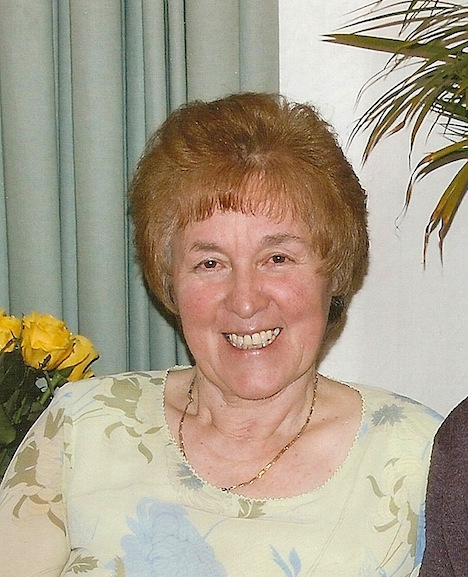
It's lovely to be able to publish our first post of 2017 with some great news. Manchester Irish Writers member Annette Sills was one of the Books Ireland Magazine's 2016 Short Story Competition Winners. She took joint third place with her story 'The History Man.'


Annette says:
I wrote the story as part of a project with Manchester Irish Writers about the Irish who fought in the battle of the Somme. I did actually have an Irish uncle who used us in Wigan to visit when I was a child. He had fought in World War II and was always very dapper but the story is essentially a work of fiction. I was delighted to be one of the prize winners and hope to attend the Books Ireland prize winning ceremony in Dublin in April.

Photo via Luis Llerena via VisualHunt.com

Here's the link to Books Ireland Magazine's website so you can read 'The History Man' for yourself. Congratulations, Annette!

~~~~~~~~~
Annette Sills was born in Wigan, Lancashire to parents from Co. Mayo, Ireland. Her short stories have been longlisted and shortlisted in a number of competitions including the Fish Short Story Prize and the Telegraph Short Story Club and her first novel, The Relative Harmony of Julie O'Hagan was awarded a publishing contract with Rethink Press after it was shortlisted in their New Novels Competition 2014. She lives in Chorlton, Manchester with her family.

Sunday, 3 July 2016

Lest We Forget: Poem for Somme 100

By Bridie Breen


Our final post in Manchester Irish Writers' commemoration of the Battle of the Somme.

LEST WE FORGET

https://commons.wikimedia.org/wiki/File%3AThe_Battle_of_the_Somme%2C_July-november_1916_Q4327.jpg

Lest we forget
a watery grave 
or grovelling in muck
in rat filled ditches
by brave young men.
Hell bent on justice
and survival.

There for duty
loyalty to brother 
allies and crown
Full of desire
for a better world
with freedom from tyranny.

No time to admire
amber sunsets
at Arromanche
Each new day dawn
scattered the dead
in grit and gloom.

Ashes to ashes
away from home
Au Revoir letters
written before bullet
shot and shell.


Resilient mothers
suffocated by grief
as paper telegrams 
choked breath and dreams.

The unborn unknowing
of the reason
for bravery.
Three score and ten
the allotted span 
where peace reigns.

Lest we forget 
the sacrifice
of a ghosted generation
that gifted our sleep
by their bloodied youth.

Beaches of golden silt
buried deep the past
Inscriptions as markers
of heroes not forgotten.

We the keepers 
the watchers
of our world.
Lest we forget.


~~~~~~~~~~~~~~
Poppy images courtesy of & © Alison Morton.
Text © Bridie Breen
Bridie has been a member of Manchester Irish Writers for quite a few years. Although her first love is poetry, she writes on all topics. She has contributed to the group’s publications “Stones of the Heart” and “Changing Skies”. Her Changing Skies piece is available to download as a voice over. She regularly performs at the group’s events. She has had successful collaborations with New Attitude theatre and Emerge theatre in the past and more recently performed with Athlone Poetry in the Park group. She has taken her love of poetry to local cafe settings. She enjoys writing short scripts too. Her wish is to have a poetry anthology published. In the meantime, she’ll be trying out at performance style poetry venues to showcase new work in the coming months.

To find out more about MIW's Somme 100 Commemoration, please click here.

More like Rugby than Football

By Des Farry


This is a different perspective on the Somme which looks at brief moments of normality occurring in a terrible conflict which is set against a sports background and draws some comparisons between both.


MORE LIKE RUGBY THAN FOOTBALL

https://commons.wikimedia.org/wiki/File%3AChristmas_day_football_WWI_1915.jpg

They were sent on the attack on the first day, their objective was the German Schwaben Redoubt.

The Ulsters reached their target but couldn’t hold it. In the horror and confusion of the battle the reinforcements sent to support them never made it through no man’s land and they were forced to retreat. The soil of Thiepval Wood and the trenches previously dug there by the French and Scottish Regiments, named after local landmarks or place names of Scotland, hold the bodies and names of those who never made it and were never found, a cemetery of trees not headstones.

It wasn’t just them that day, it was the same all over.  It was the way that it was all through the following weeks and months, a never ending repetitive story that never reached a conclusion.
They weren’t alone. There were so many other different races of people that he had never met before.
The Ulsters were fighting alongside Irish troops from the Connaught Rangers. The English, Welsh, Scottish, Australian, South Africans were their colleagues with whom they could communicate. It was more difficult to do so with the French and French-African troops.

It was during the rare breaks in this horror that they sometimes were able to talk about the life that they had lived before they all had come together in this hell hole.

https://commons.wikimedia.org/wiki/File%3ASport_during_the_First_World_War_Q61558.jpg

Football was a favoured topic. Competitive football had stopped in England. No one knew when it would restart. He’d been talking about it with the Manchesters. There was a bribery scandal involving one of their clubs which remained unresolved.

The break along the line on Christmas Day to play football on No Man’s Land was a far too brief escape to normality  from  a pointless shifting war, where you moved forward, then backward to where you were a few months ago. A time to exchange gifts and souvenirs, try each other’s helmets and swap cigarettes.

It stuck in his mind. It was only much later when he read about the Connaught Rangers involvement that he thought that the whole war was more like rugby than football. It was the pack moving forward and backwards, it was about maintaining possession and territory.

~~~~~~~~
Text © Des Farry

Des Farry comes originally from near Omagh in Northern Ireland and has lived in Greater Manchester for over 40 years. He has been writing since about age 15 (local notes for Ulster Herald). He has written or contributed to various published and internal non-fiction organisational professional guides and books on corporate finance plus a number of short stories for various competitions and the former Dublin Writers Site (Electric Acorn).

To find out more about MIW's Somme 100 Commemoration, please click here.

Saturday, 2 July 2016

The Widow Quinn: Poem for Somme 100

By Kevin McMahon


Just about every village in Ireland had them: old women in black shawls who lived totally secluded lives, often scorned or feared by their neighbours. Few took the trouble to understand such women, or what had made them the way they were. 

At a time of great political upheaval in Ireland, the tens of thousands of men who enlisted to fight in the First World War were derided for turning their backs on the fight for freedom at home  The sacrifice that so many made was disregarded.  This poem focuses on one such case.

THE WIDOW QUINN


Birdsong shrank the road outside her house, 
To a dappled tunnel, thrilled with noise,
Draped with cloak of honeysuckle scent.
Our step quickened when we passed her gate,
Not taking chances, hushed and fearful 
Of the older, bolder ones who risked
A bating shout or threw fir cones at the door.  

We deciphered parents’ warnings,
“Poor woman” comments, shorn of sympathy;
Their surreptitious nods, and knowing looks
Belied begrudged respect for a soldier’s wife.
Her wits had been astray since his early death,
At a place called Somme in France, they said.
A wasted life in England’s war, they said.

One winter day I met her face to face,
Black-shawled as ever, bent with strain
As she hefted water from the roadside spring.
She stopped and gaped a toothless smile at me
But contagious dread tore my gaze aside,
And breathless with panic I bolted home.


That March she died – as she had lived so long – 
Alone, her last instructions written for the priest.
Beneath the widow’s shawl, her waist length hair 
Had been plaited in a coil of startling white.
As she had willed the hair was then cut short,
Its strands hung in the branches of her trees.

When, later, neighbours gathered at the church –
Each drawn by duty rather than respect –  
They shook their heads and shrugged, and all agreed
The “poor old thing was soft this many year”,
While in the budding bushes round her house
The birds wove nests with glinting flecks of white.


~~~~~~~~~~~~~
Text © Kevin McMahon

Kevin has been a member of Manchester Irish Writers since 1998 – with a few years’ absence due to work commitments prior to his retirement!  He has contributed to the group’s publications “The Retting Dam”, “Stones of the Heart” and “Changing Skies”, and regularly performs at the group’s events.  He is a former winner of the “New Writing” award at Listowel Writers’ Week in Country Kerry, and has been shortlisted for a number of other awards for memoirs and short stories.

With Alrene Hughes, Kevin co-edited the publication of monologues arising from the Changing Skies project.  His scripts have been professionally performed in various venues, and he has had poetry broadcast on the BBC.

To find out more about MIW's Somme 100 Commemoration, please click here.

Testimonies of Trauma: The Somme and other Battles in World War 1

By Rose Morris


Military History has described much of the four months of Somme battles in detail. The records of the regiments attacked and the weaponry used, the comprehensive casualty lists are always used to describe the horrors of the First World War. They explain to us what happened in facts and figures but do not tell the real human story and the conditions in which these men fought. They fail to describe the daily life of the soldier, or of the landscape in which he lived, fought and got injured or died. They do not tell of his family, the loved ones he left behind. It is only from the letters that were sent while alive that we get an insight into their human state, their thoughts and fears, their plight or their reasons for being there.

https://upload.wikimedia.org/wikipedia/commons/f/fb/The_Battle_of_the_Somme%2C_July-november_1916_Q4245.jpg

To learn more about this we are fortunate that the interpretation by poets and writers who enlisted, soldiers letters to their loved ones, artists such as Paul Nash, photographers like Fr. Frank Browne, of Titanic fame, and the diaries of survivors to enlighten us on this aspect of war as they present their observations and feelings in a more emotional and human way.

Over the past one hundred years, so much great writing has been sourced from World War 1 testimonies. Donegal writer Patrick McGill’s novel, The Great Push. Sean O’Casey’s play, The Silver Tassie. How Many Miles to Babylon, Jennifer Johnston’s novel.  Frank McGuiness’s play, Observe the Sons of Ulster Marching Towards the Somme.  A Long Long Way, Sebastian Barry’s novel.

The Silver Tassie by Sean O'Casey

They tell this story against a background of destruction, pungent smells and of mud and slime all of which appears to be ingrained in the mind of survivors, never to forgotten. Personal reports and stories of World War 1 describes men living like animals beneath the ground in trenches and dug-outs in a ‘world of mud’ and often makes use of words such as burrow and crawl, a language more associated with wildlife than human beings. Patrick McGill served as a stretcher-bearer on the Western Front, remarked “a soldier came crawling towards us on his belly, looking for all the world like a gigantic lobster that had escaped from its basket."

Often highlighted in these expressions is the soldier’s struggle with his conscience on his true reason for being there and his thoughts on the futility of war.

This can be more evident in the work of two Irish writers, Thomas Kettle and Francis Ledwidge for  they have also had to come to terms with fighting on behalf of a country which has historically been perceived as the enemy and both of them had been Irish Volunteers actively seeking independence alongside the poets and writers of the Celtic Revival who were among these executed in the 1916 Rising.

https://commons.wikimedia.org/wiki/File%3ATom_Kettle.jpg
Thomas Kettle

In his poem, To my Daughter Betty, A Gift From God,  Kettle leaves very little doubt as to his feelings and his fear that he would not survive the war. It is dated ‘In the field, before Guillemont, Somme, Sept. 4, 1916’. He was killed in the battlefield in Ginchy four days later.
So here, while the mad guns curse overhead

And tired men sigh with mud for couch and floor,

Know that we fools, now with the foolish dead

Died not for flag, nor King nor Emperor 

But for a dream, born in a herdsman's shed,

And for the secret Scripture of the poor.

In a letter to his brother Kettle wrote,
“I hope to come back. If not, I believe that to sleep here in the France I have loved is no harsh fate, and that so passing out into silence, I shall help towards the Irish settlement." 

https://commons.wikimedia.org/wiki/File%3AFrances_Ledwidge_from_Bain_collection.jpg
Francis Ledwidge

It is a striking contrast that Ledwidge’s war poetry, inspired by his memories of the natural habitat of his native County Meath, still retains a pastoral flavour while all around him was 'the muddy ranks of war’.
The hedges are all drowned in green grass seas,
 
And bobbing poppies flare like Elmo's light,
 
While siren-like the pollen-stained bees
 
Drone in the clover depths. And up the height
 
The cuckoo's voice is hoarse and broke with joy.
 
And on the lowland crops the crows make raid,.
 Before his death, Ledwidge wrote to the poet, Katherine Tynan:
"If I survive the war I have great hopes of writing something that will live. If not, I trust to be remembered in my own land for one or two things which its long sorrow inspired." 

He is, in fact, well remembered for his poem written after the execution of his friend Thomas McDonagh;
He shall not hear the bittern cry

In the wild sky, where he is lain,
Ledwidge was killed by an artillery shell at Ypres in 1917 and is buried in the cemetery at Artillery Wood at Boesinghe.

Kettle and Ledwidge have left behind a powerful testimony of their wartime experience as Irish nationalists in the British army. They speak to us on behalf of the many for whom we have no written record. They saw themselves engaged in a fight in Ireland's name and for Ireland's cause.

It is perhaps not wholly surprising that the writings of Kettle and Ledwidge have been overlooked. In Ireland. Their sacrifice was long overshadowed in modern Irish history which mainly dwelt on the General Post Office in 1916 rather than the Western Front.

Another interesting contrast is to be found in the literary responses from W.B. Yeats, who was not involved in military action yet he defines this particular period in Irish history and reflects on the dilemma of Irish men fighting in the British Army.
I know that I shall meet my fate
Somewhere among the clouds above;
Those that I fight I do not hate
Those that I guard I do not love.
https://commons.wikimedia.org/wiki/File%3ARainbows_couds_sky.jpg

~~~~~~~~~~~~~
© Rose Morris
Rose Morris was born near Dungannon, in Co. Tyrone. Having retired from a career in Art and Design Education in Greater Manchester she now spends more time pursuing her creative interests and involvement in community projects in Manchester and County Tyrone.
She co-founded the Manchester Irish Writers group with Alrene Hughes in 1994.
Her continued involvement and sharing within that group has greatly enhanced the development of her own writing.
Her short stories, monologues and poetry have been included in the Manchester Irish Writers’ published collections; The End of the Rodden, The Retting Dam, Stone of the Heart, Drawing Breath and Changing Skies.

To find out more about MIW's Somme 100 Commemoration, please click here.

Friday, 1 July 2016

July 1st 1916: Poem for Somme 100

By Bridie Breen


A poem to mark the centenary of the battle of the Somme, 100 years ago today.

JULY 1ST 1916

https://visualhunt.com/f/photo/14769830092/d838f17144/

The lads practised the names 
of French townlands,
while holding fort in trenches
in Thiepval Wood.
Laughed in camaraderie, 
as they accented Chantilly.
Dreamt of Parisienne ladies
bedecked in fancy hats and lacy attire.
Imagined steamy fetlocks,
cigar smoke and winning bets.
But no horses ran on the racecourse,
in the Battle of the Somme.
Commanders commanded
and the war raged on.

Kitchener’s finger had pointed to all.
The young hearts of a nation swelled
as Volunteer armies forged.
Neighbours steeled by patriotic fervour,
Wished to serve alongside each other.
Childhood friends bonded forever 
as brothers in arms. 
Lord Derby called them a Battalion of Pals.


Regiments gathered in one week flat
from farmland and village,
they went together en masse
to stand tall or fall down,
in the name of their God, 
King and country.
Town and City names 
were bore with pride.
Enlisted not conscripted,
heading for the Western Front.

A cloudless sky, as dawn broke into July.
Mist laden Rivers Ancre and Somme
spoke of sunny possibilities to 
Generals in Chateau’s
While helmeted young men
Signed themselves with a cross
Kissed items of sentiment
Wrote hurried letters to mothers 
and sweethearts.
Looked to each other, 
nodded to bugle horn, then went over the top.
If war had not been the reason
a race perhaps or a restful relax.
No such luck as they waded
 in mucky rat filled pits.
Cannon fodder, 
so far away from home.

https://visualhunt.com/f/photo/4699181075/8f1724f5b2/

In that French valley of death 
machine gun fire showered 
from the sky
Wires had been cut in time,
a vain hope held for deadly attack.
Efforts failed to prise Beaucourt 
from German grasp
Haig and Joffre’s great plans met mishap
Concrete dugouts, withstood well
bombarding shells.
German trenches, stayed intact.

Bodies lay where they fell.
A mound for comrades to climb across,
caused much delay and further loss.
A hill too high to make advance
Boys were forced to become men
on that Gommecourt spot.
Lieutenant Cather’s gallantry
saved some wounded men 
Little chance himself of surviving
such a carnival of hell.
Nine Victoria crosses
awarded on that first Somme day
Six died in selfless sacrifice
Three lived to wear the medal
and relive the deed to their end
A cemetery now stands where once 
many thousands plodded
then dropped as stones
in the Big Push, onto No Man’s land.

https://upload.wikimedia.org/wikipedia/commons/7/75/Sir_John_Lavery_-_The_Cemetery%2C_Etaples%2C_1919.jpg

~~~~~~~~~~~~~
Text © Bridie Breen
Bridie Breen has been a member of Manchester Irish Writers for quite a few years. Although her first love is poetry, she writes on all topics. She has contributed to the group’s publications “Stones of the Heart” and “Changing Skies”. Her Changing Skies piece is available to download as a voice over. She regularly performs at the group’s events. She has had successful collaborations with New Attitude theatre and Emerge theatre in the past and more recently performed with Athlone Poetry in the Park group. She has taken her love of poetry to local cafe settings. She enjoys writing short scripts too. Her wish is to have a poetry anthology published. In the meantime, she’ll be trying out at performance style poetry venues to showcase new work in the coming months.

To find out more about MIW's Somme 100 Commemoration, please click here.

Thursday, 30 June 2016

Who were the Irish at the Somme?

By E.M. Powell


2016 marks the centenary of Ireland’s Easter Rising. The events of Easter 1916 marked a crucial turning point in Irish history and ultimately led to Irish independence. But while the Rising was indeed pivotal in Irish history, it was taking place against a background of one of history’s bloodiest and most horrific conflicts: the First World War, in which around 17 million soldiers and civilians were killed. That Ireland supplied 200,000 men to fight Britain's cause against Germany is often overlooked. Many lost their lives or were terribly wounded.

Much of that grievous loss and harm took place at the Battle of the Somme, in Northern France, in which Irishmen from both sides of the political divide fought.

The first day of the Battle of the Somme, July 1 1916, was the worst in British military history. Some 19,240 men were killed. By the time the battle ended in November of 1916, over 3,500 Irish soldiers had died, with thousands more wounded.

It was Ulstermen who suffered the worst casualties on that first day. The 36th Ulster Division lost 5,500 officers and men—killed, wounded or missing. The men of that division behaved with the utmost bravery. Four Victoria Crosses were awarded to officers and men of the Division for their gallantry, two of them posthumously. But their sacrifices counted for little. They were the only British division to reach the German second lines, yet made little ground overall.


But Ulster was not the only Irish province to suffer losses. The 16th Irish Division, consisting mainly of men from Munster, Leinster and Connacht had 4,330 casualties in September at the Somme, of whom 1,200 were killed. There were also Irish soldiers who fought in other divisions as part of the regular army or in the newly raised battalions. The total number of Irish casualties will never be known.

Neither was it just Irish men who were at the Somme. Irish women were there, too. Professional nurses and volunteers in the Voluntary Aid Detachment (VAD) and the Red Cross tended to the dying and wounded, and drove ambulances. One estimate puts the number of Irishwomen who served as VADs at 4,500. Some lost their lives or were wounded.


The dead and wounded Irish may have come from both sides of the political divide in an Ireland that was in political turmoil in 1916. For those who did return, that turmoil would continue. Home did not bring peace.

It is easy to claim or blame the dead for one’s own political ends. Yet on this, the evening before the centenary of that appalling battle, perhaps we should pause to consider these words from those who were there: one statement from one side of the Irish struggle, one from the other:

'There is nothing but the mud and the gaping shell-holes - a chaotic wilderness of shell-holes, rim overlapping rim - and, in the bottom of many, the bodies of the dead.'
‘Not a few of the men cried and I cried.’

These words have no politics. They are what we should commemorate. And strive to never have to utter them again.
~~~~~~~~~~~~~~
Images courtesy of & © Alison Morton.

MIW member E.M. Powell was born in Cork City into the family of Michael Collins.
She now lives in Manchester with her husband, daughter and a Facebook-friendly dog. Her medieval thriller Fifth Knight series has reached bestseller lists in the U.S., the U.K. and Germany.
Book #3, THE LORD OF IRELAND, was published by Thomas & Mercer on April 5 2016. She is also a contributing editor to International Thriller Writers The Big Thrill magazine, blogs for English Historical Fiction Authors, and reviews fiction & non-fiction for the Historical Novel Society and is part of the HNS social media team. Her website can be found at www.empowell.com.

To find out more about MIW's Somme 100 Commemoration, please click here.


Wednesday, 29 June 2016

Who Shall Divide Us: Poem for Somme 100

By Patrick Slevin


The Connaught Rangers was an Irish Infantry regiment of the British Army. Known as The Devil's Own, they fought at Guillemont and Ginchy in the Battle of the Somme. In just over a week's fighting the 6th Battalion lost 407 men and 23 officers. This poem is about the men who fought, lived and died in those French fields. Their company motto was 'Quis Separabit' (Who Shall Divide Us).

https://upload.wikimedia.org/wikipedia/commons/7/78/Andersons_badge.jpg

WHO SHALL DIVIDE US

All to one side like the town of Ballyvary,
They were eager for that boreen. Once barefoot
Boys, they dragged their boots, ankle deep in slutch
With blistered souls. Smudged lamps hovered like

The townsland stretch but no sleans were slung across
Broken backs. Smoke lingered white, still, in the
Night, as they ached their way forward to ‘The 
Bold Fenian Men’. Sporadic cracks split the

https://upload.wikimedia.org/wikipedia/commons/7/76/The_Battle_of_the_Somme%2C_July-november_1916_Q4235.jpg

Grey, red punctured skies, they felt the dead crossing
The back of their throats. Dark eyes shouted behind 
Unshaven faces, washed with cold drizzle.
Teeth rattled amongst them like Gerry’s own 

Gun. Crouched, closing eyes, no time for jigs 
Or forty-five, they could have heard the sap, 
if only it grew. In the silence, in 
The seconds, before the whistle blew, frost 

Bitten pale hands clenched un-farmable soil. 
Green hearts and dry mouths weren’t warmed by 
Brave words, they didn’t take bets on who’d be
First to Berlin. As dawn descended, the

https://upload.wikimedia.org/wikipedia/commons/d/df/Daily_Mail_Postcard_-The_High_Street_of_Guillemont.jpg

Screeching skreel screamed through the high sided gulch.
One banshee’s wail for that Guillemont field.
In formation they stuttered to German 
Alarms, the bodhron halted, no encore was

Called. Emeralds lay scattered, The Devil’s Own jewels.
The harp strings broken, ‘Who Shall Divide Us’
Remained unspoken. The breathing cried
Prayers. Desperate for peace and for home.


~~~~~~~~~~~~~~
Text © Patrick Slevin
Patrick Slevin lives in Stockport. He has been writing poems and stories for many years.

To find out more about MIW's Somme 100 Commemoration, please click here


Tuesday, 28 June 2016

Irish Soldier of the Somme

By Martha Ashwell


My childhood school friend was Claire Dignan (a derivative of Duignan), third generation Irish and living in Manchester.  This is the story of her father’s experience as a British soldier fighting in the First World War.  His account is personal to me because I knew him and loved him. 

 Growing up with an English accent, Tom attended a small Catholic school which he left at the age of thirteen.  When the call to arms came he naively joined the queues of young men seeking to defend his adopted country. Tom was just one of so many who learned to traverse the narrow line between life and death.

Tom Dignan
Image courtesy of the Dignan family

IRISH SOLDIER OF THE SOMME

One rainy day in April 1851 the Duignan family disembarked at Liverpool. They came from a place called Mohill, County Leitrim, Province of Connacht.  Seven of them, there were; some were deathly pale, some had rosy cheeks.  The older lads were strong like their Da but the weaker ones, boys and girls, were trailing, touching their Mammy’s skirt as it dragged heavily across the cobbled quay.  

They settled first in Macclesfield.  Maybe the lads found work on the land.  Then, on to Manchester where they put down roots and worked their way as best they could.  Times were hard and the years passed slowly, long day following long day.  They missed Mohill and the people they loved.  They missed the green fields and high wind-swept skies.  

Generation grew from generation; deaths and births went hand in hand.  The natural passing of life and its subsequent renewal affected them just like everyone else.  They made friends; some of their own kind, others who were neighbours and church people like themselves.  Integration secured them another land to love - England.

In 1898, Tom was born.  He was a strong independent lad with a bright smile and clear eyes.  He loved his family but he craved adventure.  Tom hadn’t much interest in politics but he always knew right from wrong.   At seventeen and a half he signed up for war. His military induction included a visit back to Ireland, somewhere near Dublin, where he received basic training.  As a Catholic, he attended Mass on Sunday with his other Catholic comrades.  They had to leave Mass early to avoid the condemnation they received from some of the worshippers who didn’t look kindly on any man dressed in British uniform.  It hurt Tom to think that he was scorned and despised for doing his duty.  

https://upload.wikimedia.org/wikipedia/commons/e/ef/British_WW1_Soldiers_defeat_the_Germans_%287528034212%29.jpg

He fought at Ypres and then at the Somme.   Tom was shot by a German soldier while fighting to defend a railway station which had been captured by the British side.  It was bad, very bad!  The bullet just missed Tom’s femoral artery.  They carried him out to the hospital site dodging the bullets and shells.  He’d lost so much blood, they feared he would die but somehow he managed to cling on. A few weeks later they sent him home, home to England where his family had been praying for his safe return.  He became another statistic!  Another lie!  

https://upload.wikimedia.org/wikipedia/commons/4/4e/Postcard_of_WWI_hospital_ward_in_December_1914._Probably_Le_Havre_region._%286238325023%29.jpg

Tom recovered and lived on with the effects of his injuries.  He limped through the years but maintained his sense of humour and his sense of proportion.  He never complained; he had no regrets.  He married, and he and his wife raised four children.  He trained in accountancy and worked long hours in the city ensuring that his own children were free to make the choices they wanted as they grew up and left the family home.  Eventually, eight grandchildren were born and they were the joy of his life.

Tom was loved for his humour and kindness and for the twinkle in his eye.  
When he was asked, ‘What would you do if you met the soldier who shot you?’  
He answered, ‘He was probably just a lad like me!’  
‘I’d kiss the bastard and thank him!   Thank him for releasing me from hell on earth. 
By trying to take it, he gave me my life.  If your time’s up, it’s up!   Mine had some way to go.’ 
‘It wasn’t the same for all the lads who fought so bravely for King and country.’  
‘I’ve no regrets, though!  I did what I had to do.’

There’s more than a little bit of Ireland in England today.  For all the wrongs that have been done, England has provided succour to those who left to escape the hunger, the lack of work, the deprivation of land and inheritance.  For the Duignan family the Irish heart remains.  The English influences are deep-rooted and Tom’s children and grandchildren have prospered in their adopted country.  Yet, there’s still a strong and enduring pull to Ireland and the little town of Mohill deep in the Irish countryside.
~~~~~~~~~~~~~~~
The text in this post is © Martha Ashwell

Martha Ashwell lives in Stockport and is a member of the Manchester Irish Writers.  She loved writing as a child but only started writing seriously about four years ago.  She has written poetry and prose which has been performed at The Irish World Heritage Centre in Manchester. 

Her main achievement to date is the publication of her personal memoir ‘Celia’s Secret: A Journey towards Reconciliation’. Find out more by visiting her website at http://marthaashwell.co.uk/home/

To find out more about MIW's Somme 100 Commemoration, please click here

Monday, 27 June 2016

Somewhere in France: Poem for Somme 100

http://alison-morton.com/


By Kathleen Handrick

Godric Kean was born at Crook and Billy Row, Durham in 1866. He was of Irish Heritage and began his working life as an Apprentice Tailor, following in his father's occupation.

He then studied for the priesthood in England and Fribourg, Switzerland and was ordained a priest for the Salford Diocese in 1896. He was appointed to St Mary's Oldham, my family parish, in 1911.

Father Godric Kean
Image courtesy of Oldham Archives

In April 1915 he left Oldham together with other diocesan priests to become chaplains to the armed forces. Father Kean joined the 12th Durham Light Infantry. The Battalion arrived in France in August 1915 and entered the Battle of the Somme on 3rd July 1916 and was involved in the capture of Contalmaison on 12th July 1916.

Several letters from Father Kean were published in the local Oldham newspaper at the time.  His letters indicate that he was most enthusiastic about his role as a minister to the troops and he wrote eloquently and graphically of the events he witnessed.

My piece is a 'Found Poem', inspired by Godric's letters to the people of Oldham.


SOMEWHERE IN FRANCE

Deo Gratias -Thanks be to God 
all here are filled with hope. 
Cheerful - almost joyful. 
How shall we be when
our victory is crowned!

I love so much this military life.
Our excellent fellows
on the march, in the trenches.
Their gallant conduct 
without fear or shame.

Inspired, sublime ideals.
Ready for the sacrifice ahead.
Our soldiers cannot be beaten
in spirit. We are ready to face
this modern warfare.

https://commons.wikimedia.org/wiki/File%3ALancashire_Fusiliers_trench_Beaumont_Hamel_1916.jpg

Oh, the darkest of times are here.
Encircled by imminent danger,
thundering onslaught from every side,
explosive shells screaming and tearing.
Mine after  mine,
village upon village
drenched in blood!

I do my duty.
Churches without masses
Children without schools
Parishes without padrés.
Burials in the dead of night
Plain wooden crosses.
Cemeteries everywhere.

The French, our proud allies, 
Brave fighters, excellent artillery.
Thousands lie slain!
Gas shells overcome those who 
could not be beaten fairly.
See, the heroic Munsters dying.
Conquered, poisoned.

https://upload.wikimedia.org/wikipedia/commons/5/57/France%2C_Somme%2C_Frise%2C_1916.jpg

The thick of the battle, the great offensive   
Our courageous men in action, 
how tolerant in their agony.
Glorious beings destroyed, 
shattered by shrapnel.
Excruciating pain yet 
unaware of sufferings.

We push on; slowly but surely. 
Every inch of soil soaked in blood.
The price of progress is high.
The Saxons, the Wurtemburgers, 
The Prussian Guards all against us. 
Their bravest, youngest, strongest. 
Their blood flows too freely.

https://upload.wikimedia.org/wikipedia/commons/5/57/France%2C_Somme%2C_Frise%2C_1916.jpg

How great their torment.
Starved, no food to sustain.
That proud eagle ensnared,
caged by bayonet bars.
Our kind hearted men offer comfort,
tea, coffee, cigarettes.
Such compassion in this deadly place.

What a time is this! 
What sights I see! 
And yet, I thank God. I am honoured.
 Blest by these brave men.
I cherish them and this army life! 

~~~~~~~~~~~~~~~~~~
Kathleen Handrick is retired and lives in Oldham with her husband and family.  She joined MIW in 2013 as a novice writer and enjoys participating in the writers’ events. Her Irish roots are in County Mayo.

To find out more about MIW's Somme 100 Commemoration, please click here.