Monday, 23 January 2017

Constance Markievicz: The Revolutionary Countess

By Marion Riley


Countess Markievicz by John Butler Yeats
[Public domain], via Wikimedia Commons

Countess Markievicz was born Constance Gore-Booth in 1868 in London to Sir Henry Gore-Booth, the famous arctic explorer. As an Anglo-Irish landlord, her father was not typical of his type and administered his lands with a degree of compassion for the peasantry who farmed it. He is reported to have provided famine relief in 1879 at his estate in Sligo, This act of compassion undoubtedly inspired humanity and concern for the poor in his daughter. Living in Sligo, the family were friends with the family of W.B. Yeats, the poet.

Lissadell House, Ballinful, Co. Sligo- Constance's childhood home.
Photo: Kay Atherton [CC BY-SA 2.0], via Wikimedia Commons

Constance studied painting in London in 1893 where she became involved in the issue of suffrage for women, joining the 'National Union of Women's Suffrage Societies'. She continued her artistic studies in Paris in 1898 where she met Count Markievicz, who was a Ukrainian aristocrat of Polish origin. They wed in 1901 and returned to Sligo where their daughter Maeve was born. They settled in Dublin in 1903 where the Countess co-founded the 'United Artists Club' which was a cultural and artistic organisation. In 1908 she joined Sinn Fein. She continued to participate in the Suffragette movement in England and by standing for election she helped to defeat Winston Churchill in a 1908 Manchester by-election.

Open Christmas letter from the Suffragettes of Manchester.
Eva Gore-Booth, Constance's sister, is listed on there.
Image: Manchester Archives+ from Manchester, United Kingdom
[CC BY-SA 2.0], via Wikimedia Commons

In 1909 she established the radical 'Fianna Eireann' which was aimed at instructing a youth army in the use of firearms. She was jailed by the British authorities in 1913 after speaking at an IRB rally to protest the visit of George V to Dublin. She also joined the Irish Citizen Army (ICA) established by James Connolly.

As a Lieutenant in the ICA the Countess participated in the Easter Rising of 1916 where she was second-in-command at the fight on St. Stephens Green. Initially the rebels dug trenches in the green but soon retreated from this position once they became vulnerable to snipers positioned on the high buildings around the enclosed green. Under the command of Michael Mallin they occupied the Royal College of Surgeons, rebelling for a total of 6 days.

Studio portrait c.1915 of Countess Constance Markievicz (née Gore-Booth)
in uniform with a gun.
Photo: National Library of Ireland on The Commons (Flickr: Countess Markievicz)
[Public domain], via Wikimedia Commons

They surrendered only when they received a copy of Padraig Pearse's surrender order. The Countess was jailed in Kilmainham and sentenced to death but her sentence was commuted on grounds of her gender. She was released from prison in 1917 by which time the tide of support had turned in favour of the rebels and the path to independence was set.

In 1918 she was again jailed for her anti-conscription campaigning but upon release was elected to the English parliament, refusing to take her seat. She was the first woman to be elected to the House of Commons. She was a member of the first 'Dáil' (Irish Parliament) in 1919 and became the first Irish (and indeed European) Cabinet Minister, serving as Minister for Labour from 1919 to 1922.

Clare elections, victory procession led by pipers, with Countess Markievicz in white coat.
Photo: National Library of Ireland on The Commons [No restrictions], via Wikimedia Commons

She joined DeValera in opposition to the Anglo-Irish Treaty of 1922 which partitioned the country and fought in Dublin in the ensuing civil war. She was again imprisoned but this time by her former comrades-in-arms. Upon her release, she became a founder member of Fianna Fail and was elected to the fifth Dáil in 1927. DeValera had by this time changed tactics and intended to participate in the parliament. The Countess however, never got her chance when, at the age of 59, she died of tuberculosis (or possibly appendicitis) in July of 1927. She likely caught the disease while working in the Dublin slums. Her husband and family were by her side.

Glasnevin Cemetery
Photo: William Murphy from Dublin, Ireland [CC BY-SA 2.0], via Wikimedia Commons

She was buried in Glasnevin Cemetery in Dublin, the final resting place of so many Irish patriots with a farewell crowd of 300,000 in attendance.
~~~~~~
Text: © Marion Riley

Marion Riley was born in Limerick city and emigrated as a teenager to Manchester. She has worked in Sardinia, Spain, Switzerland and France. A winner and runner up of Irelands Own writing competitions, the magazine has published many of her stories and articles. Her monologues have been performed at the Library Theatre and the Royal Exchange and her poems and memoirs have been published in various anthologies such as Write North West. 
Two of her short story Films 'Curls of the Past' and 'Letting Go' are on the BBC website Telling Lives. She has also edited and published her late mother's memoirs' From Kerry Child to Limerick Lady.' Marion now lives in Sussex, close to daughter where there is space and peace for quiet reflection on life's transience.

Marion wrote a monologue 'I Did What Was Right & I Stand By It' based on Countess Markievicz's life for MIW's commemorative event, '1916: The Risen Word'. 1916TRW was performed at the Irish World Heritage Centre, Manchester on March 10 2016. MIW received the generous support of the Embassy of Ireland for this event.


Tuesday, 17 January 2017

The History Man: Short Story

By E.M. Powell

It's lovely to be able to publish our first post of 2017 with some great news. Manchester Irish Writers member Annette Sills was one of the Books Ireland Magazine's 2016 Short Story Competition Winners. She took joint third place with her story 'The History Man.'


Annette says:
I wrote the story as part of a project with Manchester Irish Writers about the Irish who fought in the battle of the Somme. I did actually have an Irish uncle who used us in Wigan to visit when I was a child. He had fought in World War II and was always very dapper but the story is essentially a work of fiction. I was delighted to be one of the prize winners and hope to attend the Books Ireland prize winning ceremony in Dublin in April.

Photo via Luis Llerena via VisualHunt.com

Here's the link to Books Ireland Magazine's website so you can read 'The History Man' for yourself. Congratulations, Annette!

~~~~~~~~~
Annette Sills was born in Wigan, Lancashire to parents from Co. Mayo, Ireland. Her short stories have been longlisted and shortlisted in a number of competitions including the Fish Short Story Prize and the Telegraph Short Story Club and her first novel, The Relative Harmony of Julie O'Hagan was awarded a publishing contract with Rethink Press after it was shortlisted in their New Novels Competition 2014. She lives in Chorlton, Manchester with her family.

Monday, 14 November 2016

Allies After All: Guest Post by Dianne Ascroft

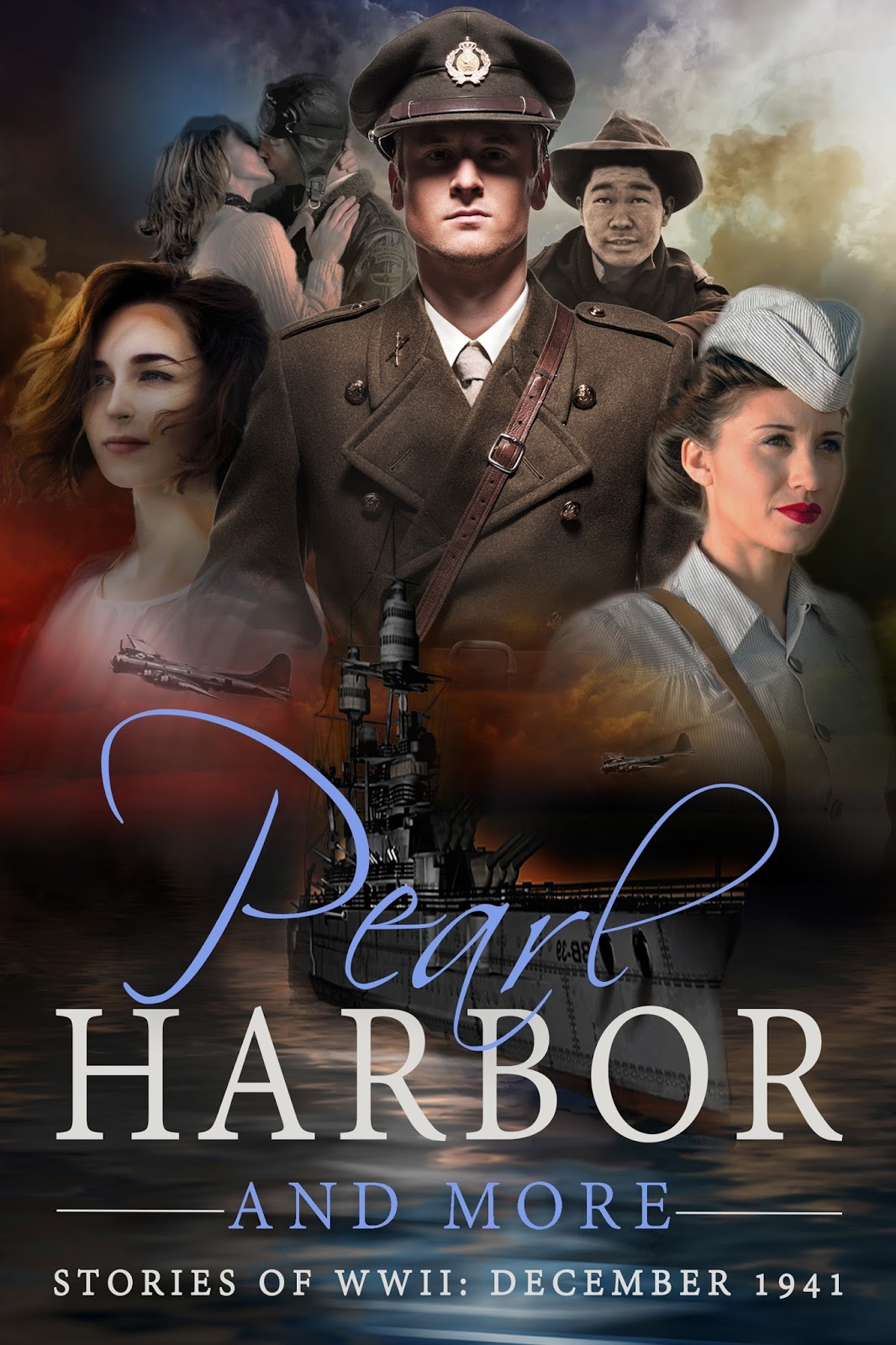
MIW are pleased to welcome a guest to our blog today. Dianne Ascroft is a member of Fermanagh Writers in Northern Ireland and writes WWII historical fiction. Her latest publication is as part of a short story collection, Pearl Harbor and More, which has been released by an international group of writers to mark the 75th anniversary of the battle of Pearl Harbour. Dianne’s story, Allies After All, is set in County Fermanagh during December 1941. In this post, she gives us an insight into the history of NI during the war and shares an excerpt from her story. 


ALLIES AFTER ALL
By Dianne Ascroft

Fermanagah Fields

As part of the United Kingdom, Northern Ireland had already been at war for more than two years when my story opens. But, it was the same, yet a different, war than the rest of the United Kingdom was waging. Due to the political and religious tensions in the province, some aspects of the province’s experience of the war differed greatly from the rest of the United Kingdom. They faced rationing, the fear of invasion by Axis troops and many saw their loved ones go off to fight.

But conscription was never introduced so those who joined the armed forces did so voluntarily. This meant that more men of military service age remained at home than in other parts of the UK. But what the province didn’t supply in manpower, they made up for with industrial output. Northern Ireland’s industries supplied ships, aircraft, munitions and cloth for the armed forces.

Lough Erne, Co Fermanagh.
Flying-boat bases were located near here.

County Fermanagh, in the west of the province, did its part for the war effort with increased crop yields and milk production for consumption locally and across the Irish Sea in England. Bordering neutral Ireland, the county was in a unique position. The hardships of rationing were offset by a thriving cross border smuggling trade between the two countries. Yet, at the same time, the Unionists in Fermanagh constantly worried about the proximity of the border, fearing that the IRA would sneak across it to attack the local targets, sabotage military operations in the county and aide Axis forces to infiltrate the province.

Local defence throughout Northern Ireland was overseen by the police rather than the military, in order to employ their local knowledge to prevent anyone with suspected terrorist connections from being accepted into the organisation. Thus, the Local Defence Force, which later became the Ulster Home Guard, was a branch of the police force.

Fermanagh Farmland

Northern Ireland was also a staging platform for the Allied troops that arrived in the United Kingdom to prepare for the invasion of occupied Europe. This included the Americans. Although America was neutral until the attack on Pearl Harbor pushed them into the war, they had already been in Northern Ireland for months, secretly preparing for their entry into the war. The construction of military installations by American civilian contractors, in various places in the United Kingdom, including
County Fermanagh, was already well underway by December 1941.

* * *

When my story opens, an American mechanic, Art Miller, working for a civilian company on the construction of ammunition storage dump facilities, meets Robbie Hetherington, a member of the Local Defence Force in County Fermanagh with interesting results. Here’s the excerpt from my story:

     Art yanked the van’s door open. Despite the crazy angle the vehicle was sitting at, in one quick movement he swung himself out of the driver’s seat onto the bumpy, badly surfaced road. Huh, you’d hardly call it a road; it wasn’t much wider than a sidewalk back home. Nothing like the smooth, straight Route 62 that passed through his hometown in New York State. The highway’s surface might crack in the summer heat, but there sure weren’t any craters in it. This was only fit for donkeys and carts. Guess that was about right around here.

     Art ran his hand across the back of his neck and up into his sandy crew cut as he stared at the vehicle. His old man had never let them grow their hair when they were kids, and he still had the same haircut he’d had in grade school. Not that he had a beef with that. He had the hair; now he just needed the uniform. He was ready to answer Uncle Sam’s call. 

     Well, if he ever got this truck outta the hole he would be. What he could sure use right now would be Popeye to come along and lift that tin can outta there. He wasn’t far outside Ardess village but he hadn’t seen anyone around when he drove through it. The place looked like a ghost town. It was more than a mile back to Kiltierney camp. If he started walking, with any luck, a truck headed for the camp would pass him and he could hitch a ride. He’d get someone to come back and tow him out.


     As he turned and started walking away from the vehicle, a young man around his own age wearing a heavy khaki overcoat and field service cap cycled toward him on a sturdy black bicycle.
     “Hiya, buddy,” Art said to the cyclist when he stopped beside him. 
     “Are you abandoning that vehicle in the middle of the road?” the khaki-uniformed man sputtered.
     “Well, it ain’t goin’ nowhere. It’s stuck in a hole.”
     “You can’t leave it there. It might fall into the wrong hands.”
      “Is that so? I don’t see anyone around here. Do you?” Art ran his hand through his hair as he stared at the man. Who is this smart aleck? he thought. 
     “See here, you certainly can’t leave it there. Spies or terrorists could sneak across the border from Ireland and have it quicker than a fox slips into a henhouse.”
     Art raised one eyebrow and snorted. “Yeah? And how do I know you ain’t a Jerry soldier? Who are you, anyway, pal?”
     “I’m a Local Defence Volunteer. Let’s see your ID.”  
     
     Could this day get any worse? Art really didn’t feel like dealing with this smart aleck right now. He had had it with being pushed around. “Is that a wing of the Boy Scouts?”
     Art thought his interrogator looked sore about the wisecrack, but he didn’t care. He just wanted to get that truck out of the hole and get back to camp to finish the repair he’d been working on. If he couldn’t convince the boss to send him home, then he would do his darndest to get this construction project finished lickity-split so he could get outta here.   
     The uniformed man regarded him stiffly. “It’s the Ulster Special Constabulary.” 
     “You’re a copper, then?” 
     “No, Local Defence. Like the Home Guard in England.”
     “Oh yeah, I’ve heard of them – aren’t they old guys, soldiers that are over the hill? Marching around with broomsticks.”
     “Not in Northern Ireland. We’re part of the police force. And we’re issued Lee–Enfield rifles.”
     Art shook his head. The guy looked pretty young to be in some broomstick brigade instead of the army, but what did he care? It was none of his beeswax. Getting this truck out of the hole was. Say, maybe this smart aleck could help him.

~~~~~~~~~~~~~~~~
All Text and Images © Dianne Ascroft 
Dianne Ascroft is a Canadian writer living in Northern Ireland. She writes historical and contemporary fiction, often with an Irish connection. Her series The Yankee Years is a collection of Short Reads and novels set in World War II–era Northern Ireland. Her other writing includes a ghost tale inspired by the famous Coonian ghost, An Unbidden Visitor; a short story collection, Dancing Shadows, Tramping Hooves, and an historical novel, Hitler and Mars Bars. She is lives on a farm near Enniskillen, County Fermanagh and is a member of Fermanagh Writers, Writers Abroad, the Historical Novel Society and the Alliance of Independent Authors. 

To purchase Pearl Harbor and More, click here.  


Wednesday, 2 November 2016

Independence Indifference: Thoughts on the Easter Rising

By Des Farry

© Des Farry

On looking back at my school days, if I was asked the question ‘What did the Easter Rising mean to you?' the answer has to be not a lot or complete indifference as something which happened in Dublin and had nothing to do with us.

Outside of school the only influences and tenuous links with the Rising were an old man who tried unsuccessfully to sell copies of The United Irishman or Inniu (‘Today’, an Irish language paper) outside Church after Sunday Mass, a background low level IRA Border campaign conducted  by outsiders  with little local input which had largely petered out and occasional home visits from people selling leather goods and Celtic Crosses made by internees at Crumlin Road Prison to raise funds.

Our only contact with the actual events of the Easter Rising was when the film Mise Eire with music composed by Seán Ó Riada was released. We were all marched down to the County Cinema en masse to see it. It was followed by a couple of Gael Linn shorts.

The first was called Peil starring Christy Ring the Cork hurler demonstrating Hurling skills with commentary in Irish and greeted in silence. Nobody had any interest at all in Hurling and not a great deal in Irish either.

The second was Gaelic Greats which finally produced emotion, when Sean Purcell, the Galway footballer appeared on screen to be greeted with a loud chorus of boos. He was infamous in Tyrone for a very heavy unpunished tackle on County goalkeeper and local man Thaddy Turbitt. Gaelic Greats??? With no mention of Tyrone maestro Iggy Jones?? Ridiculous!!

Omagh was football country, soccer on Saturday night at The Showgrounds, Gaelic on Sunday at St. Enda’s.

So what did I take from the film session? It has to be the magnificent music from Mise Eire which has never been bettered.

Sculpture of the composer Seán Ó Riada in Cúil Aodha
Photo: Dlindod (Own work); licensed under CCA.

And about the content of the film?  Nothing at all, it was never mentioned again.

So why the indifference?  Looking back it was partly down to the History syllabus of the time. Although we followed both British and Irish history as separate subjects which frequently came together albeit from different viewpoints, the time period only extended from about 1485 to the early 19th century.

Also, the local economy in early 1960s Northern Ireland was booming with the production of man made fibres and goods being major new employers alongside existing large scale traditional shirt and clothing factories. Similarly, in services new opportunities were coming through its  own TV networks and music prowess.

High levels of emigration from the Republic underlined its failure and lack of attractiveness as a dull, backward place. The aspirations expressed in the Proclamation and the film Mise Eire did not match up with the reality on the ground.
~~~~~~~~~~~
Text © Des Farry

Des Farry comes originally from near Omagh in Northern Ireland and has lived in Greater Manchester for over 40 years. He has been writing since about age 15 (local notes for Ulster Herald). He has written or contributed to various published and internal non-fiction organisational professional guides and books on corporate finance plus a number of short stories for various competitions and the former Dublin Writers Site (Electric Acorn).

Friday, 21 October 2016

First Television: A Poem to Remember Aberfan

By Kevin McMahon

50 years ago today, on 21 October 1966, a mountain of coal waste collapsed in a lethal avalanche into a school and houses in the village of Aberfan in Wales. 144 people, including 116 children, were killed. I wrote this poem in remembrance of those who died, and those who bore and still bear the grief of the Aberfan disaster.  

FIRST TELEVISION
A poem

Photo: Danielclauzier (licensed under CCA). 
21 October 1966

Excitement welled like an unseen spring,
That last day before the half-term break.
With skies dark and thick as coal sludge, 
The rain – for the second day that week – 
Had left us trapped in classrooms
Behind high, steamed and streaming windows.
I ached for the release of the evening bell.
Lessons ambled past my reverie,
Anticipating Bilko’s antics,
Concocting Oxo-family tableaux, 
A cocoon of laughter, where Michael Miles 
Presided over “Yes-No interludes”.

Unleashed by school’s end we ran,
A yelping avalanche splitting the gloom.
A knot of women huddled sombre at the gate,
Heads scarfed against the rain, in quiet talk.
Blushing at my mother’s long embrace,
And pulling at the hand that gripped my own –
With more than usual tightness – 
I rattled out my plans, my hopes,
As she palmed the raindrops from her face.

It sat, intruding on the normal,
On splayed and spindly legs,
Chairs, newly shifted to strange places,
Shrank the little parlour.
Its unfamiliar light transformed
Our faces, pallid as we watched 
A silent throng of mothers 
Where the gates had been,
Heads scarfed against the rain. 
They stood and stared at rooftops
Protruding from the spoil,
And waited for their children.

~~~~~~~~~~~~
Photo 'Condensation on a Window in Wexford, Ireland', by Danielclauzier (licensed under CCA). 
Text: © Kevin McMahon
Kevin has been a member of Manchester Irish Writers since 1998 – with a few years’ absence due to work commitments prior to his retirement!  He has contributed to the group’s publications “The Retting Dam”, “Stones of the Heart” and “Changing Skies”, and regularly performs at the group’s events.  He is a former winner of the “New Writing” award at Listowel Writers’ Week in Country Kerry, and has been shortlisted for a number of other awards for memoirs and short stories.  With Alrene Hughes, Kevin co-edited the publication of monologues arising from the “Changing Skies” project.  His scripts have been professionally performed in various venues, and he has had poetry broadcast on the BBC.

Sunday, 2 October 2016

Proclamation for All: A Poem

By Bridie Breen

PROCLAMATION FOR ALL

The scroll of proclamation
rolls words off my tongue.
One hundred years on
Easter 1916 bleats from within
the Risen lamb that bled into veins
of the men and women who testified
to the call to rise, to stand united.


A furnace to fire eternal endurance
through the lilt of a freedom song
Each Irish man and woman
Every daughter and son felt the fist of change
It pounded across the land.
Demanding choices to be made 
lines to be drawn, sides to divide
and new history to form.

A mere century on from Grattan’s demise
the tears of many were shed
Emancipation the sought after prize
Innocents died in the fury
while the raw truth of the cause
forced the iron claw to unfurl
Dominance no longer appeased the masses.

The pulse of men whose hearts
 raced as their pens scribed
In a time when signatures sealed their fate
Markers of rebellion, so distinct
they were sought out
to be executed.


History coddled the deep 
mourning of generations
The road ahead transformed
 beyond belief.
Regimes of colonial past 
illuminated   by the rising dawn. 
Home ruled hands may not have grasped
the essence of Irish hearts
Their entrenched will to change
The question remains, as to where we’d be
if the blood of those in 1916 
Became names on a chalked board
Erased  out of our imaginings.

~~~~~~~~~~~~~~~~
Text © Bridie Breen.
Images are in the Public Doman via Wikimedia Commons.

Bridie has been a member of Manchester Irish Writers for quite a few years. Although her first love is poetry, she writes on all topics. She has contributed to the group’s publications “Stones of the Heart” and “Changing Skies”. Her Changing Skies piece is available to download as a voice over. She regularly performs at the group’s events. She has had successful collaborations with New Attitude theatre and Emerge theatre in the past and more recently performed with Athlone Poetry in the Park group. She has taken her love of poetry to local cafe settings. She enjoys writing short scripts too. Her wish is to have a poetry anthology published. In the meantime, she’ll be trying out at performance style poetry venues to showcase new work in the coming months.

Bridie wrote 'Proclamation for All' for MIW's commemorative event, '1916: The Risen Word', which was performed at the Irish World Heritage Centre, Manchester on March 10 2016. MIW received the generous support of the Embassy of Ireland for this event.


Sunday, 11 September 2016

Primroses for Aisling: Poem

By Mary Walsh


PRIMROSES FOR AISLING
A poem


It’s rising dawn.
From high on a hill
He looks down over Carlingford Lough
Shining in the low distance.
He turns to see his sheep and lambs
Grazing his land
The land his father worked. 


He loves this place, this springtime of the year,
Has learned the intricacies of birth and death in fold and field
He has tended this night’s births well.

Dawn is well lit
The light below in the kitchen a field away is bright.
A last look about him then he moves towards the house.
But do not imagine his mind, busy with his lambs and sheep
Does not imbibe the beauty of the hills and hedges.


Returning to the house he gathers the spring’s loveliness
A bunch of primroses, moist with dew
Bears them in his working hands
And offers them to his young wife
As she waits at the open door.

The gift, the beauty of their yellow paleness
Fills her with love
She holds them to her face, looks up to him and takes his hand.


~~~~~~~~~~~
Text  © Mary Walsh.
Images in this post are in the Public Domain via www.visualhunt.com and Wikimedia Commons. 
Image of grazing sheep is © E.M. Powell. 

Mary Walsh was born in County Armagh. She came to Manchester and trained as a nurse in Ancoats hospital. Some years later she went into teaching and taught English in Thornleigh College, Bolton until she retired. She has been a member of the Irish Writers since 2007.